Stone Effect Tiles
383 results
-
−33%
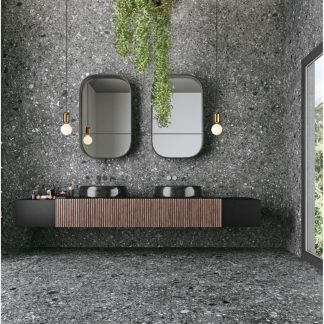
Ceppo di Gré Gré Anthracite 30,4×61 cm
R10V2 Sale!40,00 €27,00 € /m² (35,10 € per box of 1,3 m²) VAT included -
−36%
Ceppo di Gré Gré Anthracite 61×122,2 cm
R10V2 Sale!53,00 €34,00 € /m² (50,66 € per box of 1,49 m²) VAT included -
−34%
Ceppo di Gré Gré Anthracite 61×61 cm
R10V2 Sale!44,00 €29,00 € /m² (43,21 € per box of 1,49 m²) VAT included -
−36%
Ceppo di Gré Gré Anthracite 90×90 cm
R10V2 Sale!53,00 €34,00 € /m² (55,08 € per box of 1,62 m²) VAT included -
−37%
Ceppo di Gré Gré Anthracite 90×90 cm C2O (spessorato outdoor)
R11V2 Sale!99,00 €62,00 € /m² (50,22 € per box of 0,81 m²) VAT included -
−33%
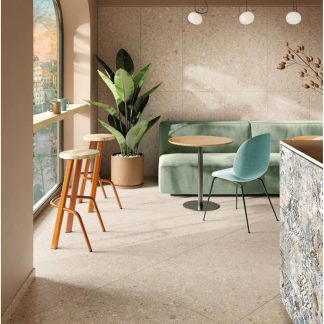
Ceppo di Gré Gré Beige 30,4×61 cm
R10V2 Sale!40,00 €27,00 € /m² (35,10 € per box of 1,3 m²) VAT included -
−36%
Ceppo di Gré Gré Beige 61×122,2 cm
R10V2 Sale!53,00 €34,00 € /m² (50,66 € per box of 1,49 m²) VAT included -
−34%
Ceppo di Gré Gré Beige 61×61 cm
R10V2 Sale!44,00 €29,00 € /m² (43,21 € per box of 1,49 m²) VAT included -
−36%
Ceppo di Gré Gré Beige 90×90 cm
R10V2 Sale!53,00 €34,00 € /m² (55,08 € per box of 1,62 m²) VAT included -
−37%
Ceppo di Gré Gré Beige 90×90 cm C2O (spessorato outdoor)
R11V2 Sale!99,00 €62,00 € /m² (50,22 € per box of 0,81 m²) VAT included -
−33%
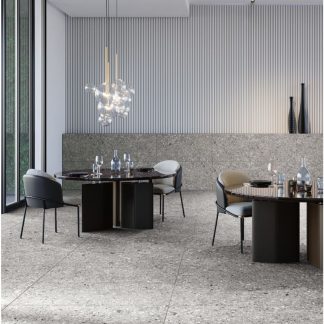
Ceppo di Gré Gré Natural 30,4×61 cm
R10V2 Sale!40,00 €27,00 € /m² (35,10 € per box of 1,3 m²) VAT included -
−36%
Ceppo di Gré Gré Natural 61×122,2 cm
R10V2 Sale!53,00 €34,00 € /m² (50,66 € per box of 1,49 m²) VAT included
All the substance of natural stone without its upkeep: quartzites, slates, limestones and Ceppo di Gré reproduced in porcelain stoneware, for floors, wall tiling and outdoor areas. Every product page carries the full technical data and the price per m² including VAT.
Stone effect porcelain stoneware: natural material, without the upkeep
Stone effect stoneware reproduces quartzites, slates, limestones and Ceppo di Gré with a fidelity that now convinces even a trained eye, but with water absorption below 0.5%, no periodic treatment and an abrasion resistance that quarried stone cannot guarantee. It is the most versatile choice in the catalogue: it works in a farmhouse as well as in a loft, and the same collection often covers floor, wall and outdoor use.
Which stone to choose
Pale stones (Lecce stone, limestone, beige quartzite) open up a space and warm up Mediterranean interiors; Ceppo di Gré and basaltina, more graphic, are the right base for contemporary rooms. The shade variation code on the technical data sheet tells you how much variation to expect from one tile to the next: V1 almost uniform, V4 as strongly textured as the quarry itself. How to read shade variation V1-V4.
Indoors and outdoors, without a break
Many stone effect collections come in two versions: a natural finish for indoors and a structured anti-slip finish for outdoors, same colour and same size. It is the simplest way to carry the living room floor onto the terrace with no visual break. For dry laying on grass, gravel or pedestals you need the 20 mm thickness, and outdoors the material must be frostproof. Guide to 20 mm outdoor stoneware · the same floor indoors and out.
Sizes, laying and how many m² to order
Rectified 60×120 is today the most widely used size: 2 mm grout joints and few cuts. Modular mixes recreate the classic running bond of stone with no extra cuts. When you order, add 10% wastage allowance for straight laying and 15% for diagonal or herringbone: the calculator on every product page converts m² into whole boxes and does it for you. How boxes and wastage are worked out · rectified or not.
Frequently asked questions
Yes, provided the material is frostproof and has a slip-resistance rating suited to wet foot traffic: R11 is used for terraces and poolsides. For dry laying on grass, gravel or pedestals you need the 20 mm thickness. The figure is stated on every technical data sheet.
Read the guide →It shows how much the pattern varies from one tile to the next: V1 almost uniform, V4 heavily varied like quarried stone. It is not a defect, it is how the series is designed: with high V ratings you mix tiles from several boxes while laying.
Read the guide →Add 10% wastage allowance to the m² of the room for straight laying and 15% for diagonal or herringbone, then round up to whole boxes. The calculator on the product page works it out and shows boxes, pieces and weight.
Read the guide →Yes. Stone effect series are often used to run from floor to wall without a break, and in large rectified sizes they reduce the grout joints on show. The Room field on the product page states which uses the manufacturer declares each item suitable for.
Read the guide →Yes: order the €5 sample from any product page. It leaves our warehouse by express courier and, once delivered, you receive a voucher equal to what you spent on samples, tied to your email address and valid on your first order.
Read the guide →The goods travel on pallets and the rate for your area is published: you see it before you pay, not as a surprise. Delivery takes 5-7 working days within Italy; in the other European countries we serve the times are indicative, between 7 and 12 working days, and the compulsory phone call before delivery adds 24 hours.
Read the guide →