Wood Effect Tiles
137 results
-
−36%
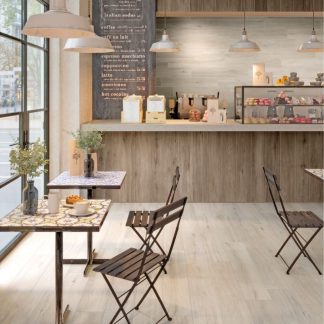
Firenze Bleached 20,2×122,2 cm
R10V3 Sale!50,00 €32,00 € /m² (39,36 € per box of 1,23 m²) VAT included -
−37%
Firenze Bleached 26×160 cm
R10V3 Sale!57,00 €36,00 € /m² (59,76 € per box of 1,66 m²) VAT included -
−36%
Firenze Bleached 30,4×122,2 cm
R10V3 Sale!50,00 €32,00 € /m² (59,52 € per box of 1,86 m²) VAT included -
−42%
Firenze Bleached 30,4×122,2 cm Teak
R10V3 Sale!158,00 €92,00 € /m² (68,08 € per box of 0,74 m²) VAT included -
−36%
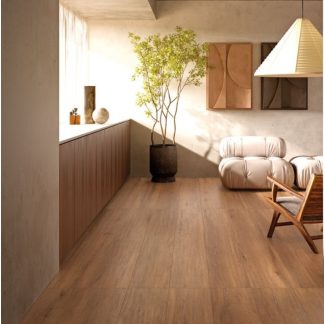
Firenze Ceraso 20,2×122,2 cm
R10V3 Sale!50,00 €32,00 € /m² (39,36 € per box of 1,23 m²) VAT included -
−37%
Firenze Ceraso 20,2×122,2 cm Outdoor
R11V3 Sale!52,00 €33,00 € /m² (40,59 € per box of 1,23 m²) VAT included -
−37%
Firenze Ceraso 26×160 cm
R10V3 Sale!57,00 €36,00 € /m² (59,76 € per box of 1,66 m²) VAT included -
−36%
Firenze Ceraso 30,4×122,2 cm
R10V3 Sale!50,00 €32,00 € /m² (59,52 € per box of 1,86 m²) VAT included -
−42%
Firenze Ceraso 30,4×122,2 cm Teak
R10V3 Sale!158,00 €92,00 € /m² (68,08 € per box of 0,74 m²) VAT included -
−36%
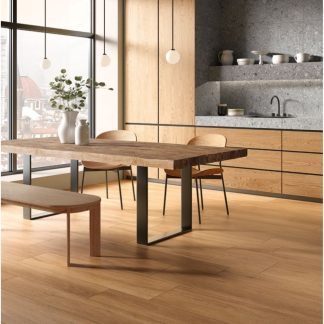
Firenze Natural 20,2×122,2 cm
R10V3 Sale!50,00 €32,00 € /m² (39,36 € per box of 1,23 m²) VAT included -
−37%
Firenze Natural 20,2×122,2 cm Outdoor
R11V3 Sale!52,00 €33,00 € /m² (40,59 € per box of 1,23 m²) VAT included -
−37%
Firenze Natural 26×160 cm
R10V3 Sale!57,00 €36,00 € /m² (59,76 € per box of 1,66 m²) VAT included
All the look of oak, walnut and pale timbers, with no fear of water: porcelain stoneware planks for bathrooms, kitchens, living rooms and outdoor areas, with a full technical data sheet and the price per m² including VAT.
Wood effect stoneware: the warmth of a wooden floor where wood cannot go
Wood effect stoneware reproduces the grain, the knots and the tones of the most widely used timbers, but it does not swell with damp, it is not troubled by bathroom steam or by the dog’s claws, and it is cleaned with water and a neutral detergent. That is why it has effectively replaced real wood in bathrooms and kitchens, and why it is now laid in living rooms too, to have one single floor throughout the house.
Planks: which size for which room
Narrow, long planks visually stretch a corridor; wide ones show the grain better and cut down the number of joints in large rooms. In a small bathroom an over-long plank means a lot of cuts: better to drop a size or to run it along the longer wall. Wood effect in the bathroom: combinations and sizes.
Straight, running bond or herringbone
Running bond offset by a third is the most natural pattern; Italian or Hungarian herringbone transforms a plain floor, but it needs planks with a well-proportioned short side and it pushes the wastage allowance to 15% against the 10% of straight laying. The calculator on the product page takes the chosen pattern into account and converts m² into whole boxes. Herringbone laying in stoneware · working out boxes and wastage.
Shade variation: why a uniform fake wood never convinces
A believable wood effect is almost always V3 or V4: every plank has a different pattern, just like a real board. If the planks are taken from a single box while laying, the result looks patchy: mix pieces from several boxes. The shade variation code is stated on every technical data sheet. How to read shade variation.
Frequently asked questions
Yes, and it is one of its most common uses: unlike a wooden floor it does not swell, does not stain and is not troubled by steam. In a bathroom a surface with an R10 slip-resistance rating is advisable, and the manufacturer states it on the technical data sheet.
Read the guide →Yes, with planks proportioned for that pattern. Bear in mind that herringbone and diagonal push the wastage allowance to 15% against the 10% of straight laying, and that labour costs more because there are many cuts.
Read the guide →Because a realistic wood effect is almost always V3 or V4, that is heavily shade-varied: it is intentional, like the boards of a real wooden floor. While laying, pieces from several boxes are mixed to avoid a patchy look.
Read the guide →Yes, if the item is frostproof and has a slip-resistance rating suited to outdoor use; for dry laying on grass, gravel or pedestals you need the 20 mm thickness. Several series exist in an indoor version and an outdoor one in the same colour.
Read the guide →The m² of the room plus 10% wastage allowance for straight laying, 15% for diagonal and herringbone, rounded up to whole boxes. The calculator on the product page shows boxes, pieces and the weight of the pallet.
Read the guide →Yes: the sample costs €5, it leaves our warehouse by express courier and, once delivered, you receive a voucher equal to what you spent on samples, tied to your email address and valid on your first order.
Read the guide →